
The Art of Leather Thongs for Men A Guide to Intentional Style
by The Den Code
·
Let's get one thing straight. The leather thong is more than just underwear. It's a loaded statement. A piece of gear that speaks a language of identity and confidence, deeply rooted in the leather and queer communities.
This isn't just about style; it's about signaling a connection to a legacy of rebellion. It’s a deliberate choice. A code.
Decoding the Leather Thong
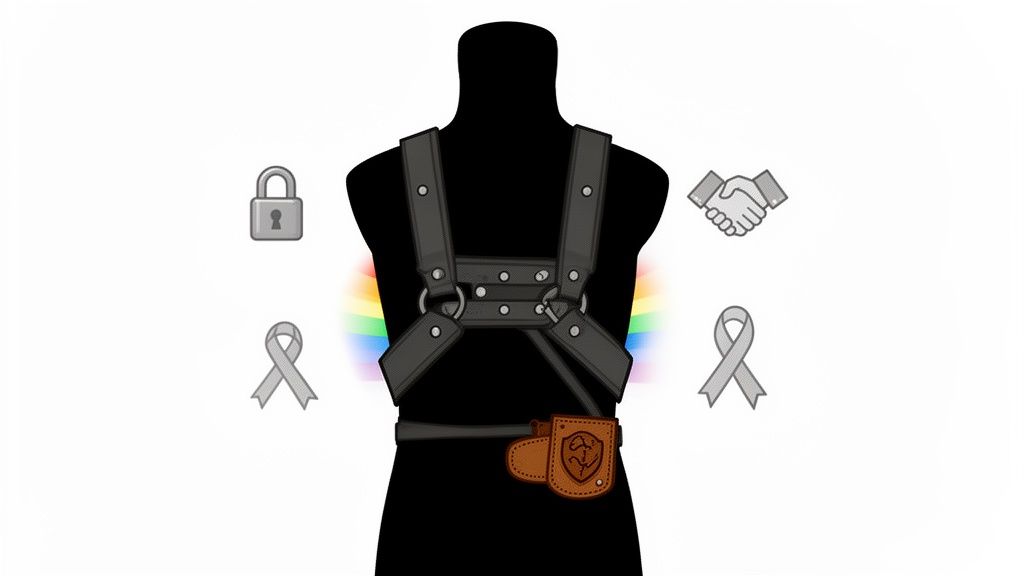
Forget everything else you’ve been told. The leather thong is an anchor. It’s the foundation for an entire aesthetic built on raw authenticity and pure intent. To wear one is to consciously step into a persona that’s both powerful and unapologetic. It signals you understand the culture. You get the code.
This gear carries a history that blows past fleeting fashion trends. It connects you to a lineage of men who used their style as a telegraph—building community, signaling intent. Wearing leather is storytelling. Your story. The community’s story. And the one you’re about to write.
A Symbol of Pure Intent
Putting on a leather thong is a declaration. It says you dress with intention, fully aware of the signals you’re sending. It’s a key that unlocks a visual language understood by those who speak it.
To wear leather is to wear a second skin. One that reflects an inner strength and a refusal to conform. It’s about owning your space and your identity without saying a damn word.
This guide is for the man who gets it. We’re not talking surface-level bullshit. We're here to decode the why behind the gear. For the man who knows his style is a narrative, not an accident. Here, we respect the craft, the culture, and the balls it takes to wear your code for everyone to see.
More Than Just Underwear
Think of a leather thong not as a hidden layer, but as a foundation. It sets the tone for everything else, whether it’s seen or not.
- A Base Layer: Your private confirmation of identity, worn under street clothes.
- An Anchor Piece: The core of a full gear look for the club, the festival, the back room.
- A Statement of Craft: A well-made piece shows an appreciation for quality, for durability, for art.
In the end, it’s about choosing gear that resonates with who you are and who you want to become. It’s a commitment to an aesthetic defined by strength, heritage, and pure, unfiltered intention.
Decoding Quality in Leather and Hardware
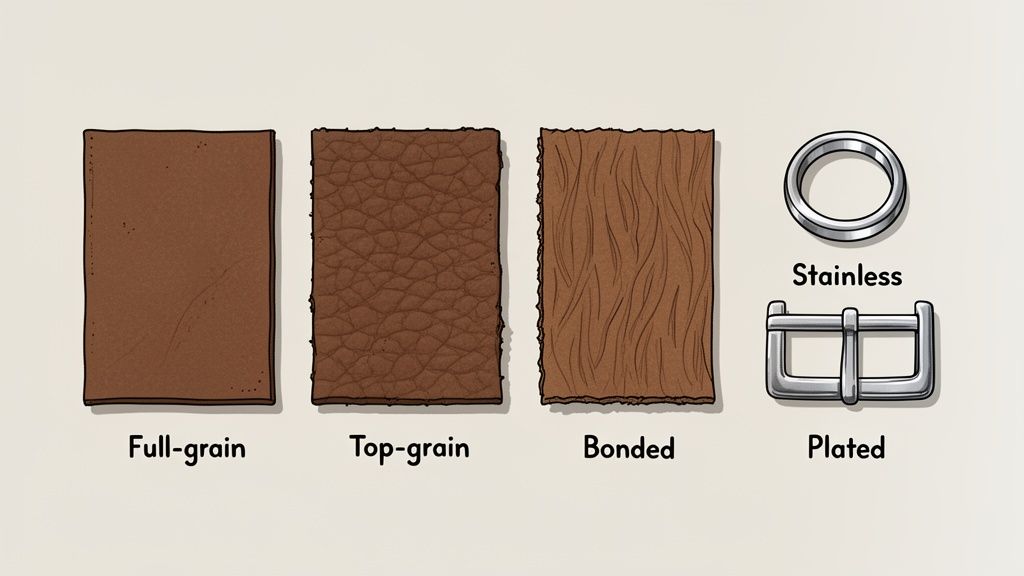
There’s a massive gap between real gear and a cheap knockoff. That gap is defined by what it's made of. To choose gear that doesn't just look the part but is the part, you have to understand the raw materials—the soul of the piece.
This isn't just about how it looks. It's about how it feels, how it holds up, how it becomes part of you. When you buy a leather thong for men, you're getting a second skin. That skin better be strong as hell.
The Language of the Hide
Not all leather is the same. There’s a hierarchy, and full-grain leather sits at the very top. This is the real thing. It’s the outer layer of the hide, with all the original grain, marks, and texture left intact. Nothing has been sanded away to hide "imperfections." Those aren’t imperfections; they’re character. They’re strength.
Full-grain leather tells its own story. Over time, it picks up oils from your skin and develops a rich patina. It literally molds to your body, becoming something uniquely yours. It’s the difference between a story etched in stone and one printed on a napkin.
This isn't some minor detail. For gear that’s going to be stretched, pulled, and worn against your skin, anything less than full-grain is a compromise you’ll regret.
Leather Quality at a Glance
Navigating the world of leather can be confusing. This quick guide breaks down what you're really looking at when you see different leather types listed on gear. It’s about knowing the difference between something that lasts a lifetime and something that lasts a weekend.
| Leather Type | Characteristics | Why It Matters for Gear |
|---|---|---|
| Full-Grain | The strongest, most durable part of the hide. Retains natural markings and texture. Develops a unique patina over time. | This is the gold standard. It's built for stress, molds to your body, and gets better with age. The only choice for serious gear. |
| Top-Grain | The surface is sanded and refinished for a uniform look. Still strong, but less durable than full-grain. | It looks clean but lacks the raw character and ultimate strength. A decent option, but it's a step down. |
| Bonded | The particle board of leather. Made from shredded scraps glued together. Looks like leather but isn't. | Avoid this at all costs. It will crack, peel, and fall apart under any real use. It's disposable fashion, not gear. |
Ultimately, the type of leather determines the lifespan and authenticity of your piece. Choose wisely.
Hardware: The Unsung Hero
Leather is the body, but hardware is the skeleton. The rings, rivets, and buckles are the points where everything comes together—and where everything can fall apart.
The hardware is the punctuation in the statement your gear makes. Weak hardware creates a weak statement. It’s a detail that speaks volumes about the maker's commitment to creating something that lasts.
Look for solid metal. Stainless steel. Solid brass. These materials don’t rust, won’t snap when you pull on them, and won't flake. The cheap shit is usually a zinc alloy with a thin plating. That plating comes right off with sweat and friction, and the metal underneath will corrode and fail.
Pick up a piece of gear. Feel the weight of the hardware. Are the rivets set solid? Does the buckle feel substantial? These are the details that separate a piece that fails you mid-scene from one you can trust for years.
See how it all comes together in our curated leather goods. It's about building a look on a foundation of raw strength. No compromises.
Finding a Fit That Becomes a Second Skin
Real gear doesn’t just hang on your body. It becomes a part of it. A bad fit is more than just uncomfortable—it’s a distraction. It kills the confidence, breaks the line, and betrays the entire statement you’re trying to make.
Forget standard S-M-L charts. Leather is organic and it demands precision. A perfect fit is a firm embrace, not a restrictive bind. It supports and accentuates without digging in or shifting out of place. This is non-negotiable. This is where you claim your space and ensure your gear moves with you.
Taking Your Measurements The Right Way
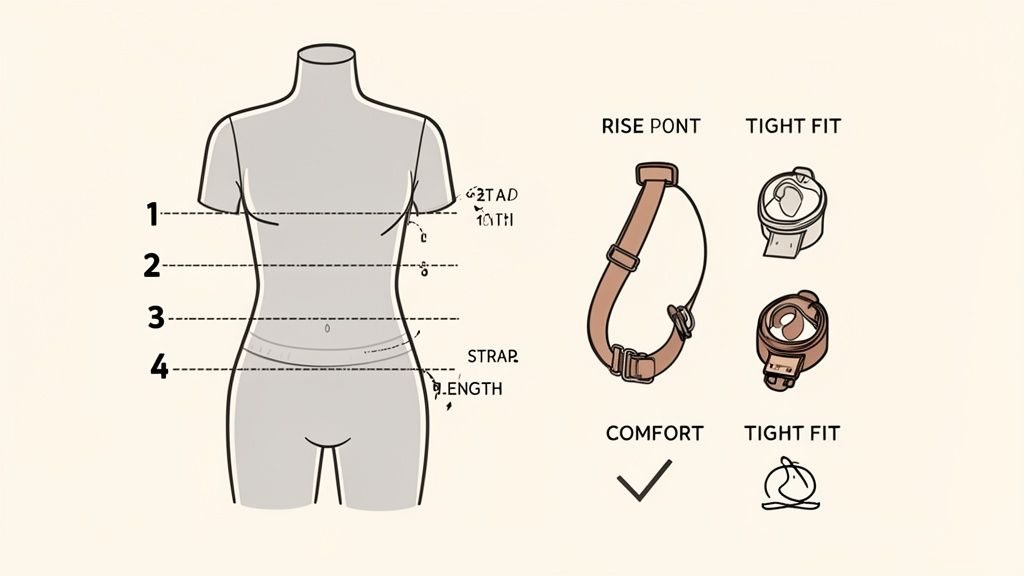
Accuracy is everything. Get a flexible tailor’s tape, not some metal thing from a toolbox. Measure against your skin to get the honest numbers. Stand relaxed. Don’t suck in, and don’t pull the tape tight.
- Waist Measurement: Wrap the tape where you’d wear a belt, usually just over the hip bones. This is the main anchor point.
- Hip Measurement: Go around the fullest part of your hips and ass. This makes sure the rear strap sits right without creating pressure points.
These two numbers are your foundation. They map the gear directly to your body.
Understanding the Nuances of Fit
A proper fit is a balance. It’s security and comfort. The straps should lie flat, the pouch should support without crushing. It’s the difference between gear that empowers you and gear you’re fighting with all night.
A well-fitted leather thong should feel like an extension of your own skin. You should be able to move, dance, and just exist, knowing everything is exactly where it’s supposed to be.
Look for designs with adjustable hardware. Buckles and snaps aren’t just for looks; they’re how you dial in the fit. They let you account for small changes in your body and find that perfect tension. This is a mark of real craftsmanship. It delivers a semi-custom experience that makes all the difference.
The goal is to put it on and forget it’s there. That’s the real power of a perfect, second-skin fit.
Styling Your Gear for Maximum Impact
A piece of gear isn’t just worn. It’s deployed. Your leather thong is the anchor, the foundation that sets the tone. How you build around it is the difference between throwing on an accessory and crafting a statement.
This isn't about rules. It’s about knowing the visual language so you can break those rules with intent. The goal is to see it as the first word in a sentence, not an isolated piece. It’s the component that dictates the vibe—whether for a full gear ensemble or just a subtle edge under your streetwear.
Building the Look
Your leather thong is the center of gravity. Every other piece should orbit it, either complementing its raw texture or creating a sharp, intentional contrast. The context tells you how to execute, but the principle is always the same: every element serves the narrative.
Here are a few classic archetypes, each built from the same foundation:
- The Classic Gearhead: This is the most direct signal. Pair a solid black leather thong with matching chaps and a bulldog harness. The uniform use of leather creates a powerful silhouette, undeniably rooted in community history.
- The Rebellious Undercurrent: This is gear brought into the daylight. Let the waistband show just above a pair of low-rise, trashed denim or black cargo pants. It’s a subtle hint, a piece of the code worn in a public space.
- The Festival Warrior: Leather meets a more rugged, eclectic energy. Combine your thong with tactical shorts, heavy combat boots, and metal accessories—chainmail, statement rings. The mix of textures creates a look that’s both primal and modern.
Your gear is a conscious choice, not a costume. Each piece you add proves you understand the code and your place in it. It's about projecting strength through a constructed aesthetic.
Coordinating the Details
Once the core look is set, mastery is in the details. The finish on your hardware—rivets, O-rings, buckles—is everything. A coordinated look where all your metal is matte black shows precision. It elevates the entire ensemble. Don't be afraid to mix textures and materials, but do it with purpose.
Think about the lines your gear creates on your body. A harness frames the torso. Chaps follow the line of the leg. The straps of the thong are part of this visual architecture. They draw the eye. They create a shape.
Use this. Construct a silhouette that is intentional, powerful, and unmistakably your own.
The Ritual of Keeping Your Leather
This isn't just another piece of clothing. It's a statement. An investment in who you are. Your gear is a second skin, and just like your own, it demands respect and care.
Treating your leather thong right isn't a chore; it’s a ritual. It’s how you honor the material and the hands that crafted it. This is what separates gear that lasts a season from gear that becomes a part of your story for a lifetime. With proper care, that full-grain leather softens, molds to your body, and develops a rich, unique patina that can't be bought or faked. It becomes yours, marked by the nights it’s seen. Neglect it, and you’re just left with a cracked, dead accessory.
The Foundation of Preservation
The ritual starts the second you take it off. Sweat, body oils, friction—they're all part of the experience, but they'll degrade the leather if you let them sit. A simple, consistent routine is all you need to protect your investment.
Grab a soft, dry cloth and give it a quick wipe-down. Every surface. This clears off any immediate residue before it has a chance to soak in and do damage. Think of it as a basic act of respect for the piece and the stories it holds.
How to Clean and Condition Your Gear
For a deeper clean, you need a dedicated leather cleaner. Never, ever reach for household chemicals, harsh soaps, or anything with alcohol. They'll strip the leather of its natural oils and ruin it for good.
Here’s the breakdown:
- Apply Sparingly: Put a small amount of the cleaner on a clean cloth—not directly onto the gear itself.
- Wipe Gently: Use smooth, circular motions to clean the straps and pouch. Pay extra attention to any spots that had direct skin contact.
- Air Dry Only: Let it dry naturally. Keep it away from hairdryers or any form of direct heat, which will just shrink and crack the leather.
Conditioning is the most crucial part of the ritual. It’s like moisturizing your own skin. A quality leather conditioner, applied every few months, puts back the essential oils that keep the material strong and supple. This is your defense against cracking. This is what keeps it pliable and ready for action.
Properly conditioned leather doesn’t just last longer—it feels better. It stops being a piece of gear and becomes an extension of you, moving with your body, not fighting against it.
Following this ritual means that every time you wear your leather thongs for men, you're not just putting on an accessory. You're stepping into something alive with history, ready to make more.
Making Your Mark with Custom Leatherwork
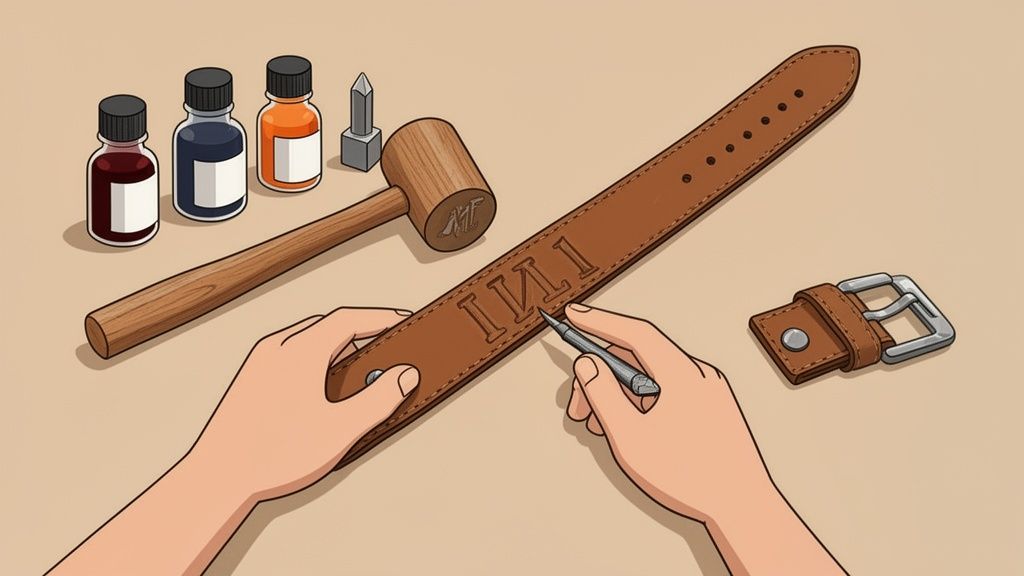
Off-the-rack gear gets you in the game. But standard issue is never the final word. Custom leatherwork isn’t just an upgrade; it’s a whole other dialect of self-expression.
This is where you stop wearing the code and start writing your own. It's the ultimate statement, turning a piece of gear into a true extension of yourself. It's the peak of the craft—a one-off piece that is unapologetically and unmistakably you.
Forging Your Signature Style
The bespoke process is about absolute control. It’s a pact between you and the artisan to create something that doesn't just fit your body, but your entire aesthetic. The only limit is your own vision.
Think way beyond a simple size adjustment. This is your chance to dictate the entire narrative, right down to the last detail.
- Hardware Finishes: Set the tone with polished chrome, gunmetal black, antique brass, or even industrial-grade stainless steel.
- Unique Leather Textures: Choose from smooth, buttery hides, rugged distressed finishes, or embossed patterns that add another layer of character.
- Personalized Details: Stamp your initials. Demand a unique stitching color. Dictate the exact placement of every ring and stud.
Custom leather is the refusal to be categorized. It is a declaration that your identity is not pre-packaged. It’s a testament to the belief that the most powerful statements are the ones you create yourself.
This is how you ensure your gear isn't just worn, but owned. It's an investment in something that tells a story nobody else can. For those ready for this level of control, exploring options like our FORGE 13 custom leather projects is the only real next step. This isn't just about building a leather thong for men; it's about crafting an artifact of your identity.
Your Questions Answered. The Code Clarified.
Let's cut the bullshit. You've got questions. They deserve straight, no-chaser answers. This is about giving you the final pieces of the code so you can own your gear with absolute authority.
Can You Actually Wear a Leather Thong for Hours?
Yes. If it’s the right piece. Real comfort in a leather thong for men comes down to two things: the right materials and a fit that’s locked in. Quality, supple leather is made to mold to your body with heat and wear. It becomes a second skin.
If it’s uncomfortable, that's a red flag. It’s almost always cheap, stiff leather or a cut that fights your body instead of working with it. Gear with adjustable hardware isn't a suggestion; it's essential for dialing in that perfect tension.
What’s the Real Difference: Thong vs. Jockstrap?
It’s about architecture. And intent. A thong is defined by its minimal back—a single strap running between the glutes, connecting to the pouch. Clean lines. Direct statement.
A jockstrap, on the other hand, is built with a supportive pouch and two leg straps that frame the glutes, leaving them exposed. The choice is yours. It's about the silhouette you want to create and the code you’re signaling.
Your gear's design isn’t just functional. It’s a deliberate choice. One that shapes your silhouette and communicates your intent.
How Do I Break In New Leather?
The best way is the only way: wear it. Your own body heat and movement are the tools. They soften the hide and make it yours.
Want to speed it up? Use a quality leather conditioner and work the material with your hands. Start by wearing new gear for short periods. Let it start to take your shape before you commit to a long night out.